“Memory is also knowing where we came from,” commented Director of Education and Advocacy Pedro De Velasco when reflecting on Day of the Dead celebrations at KBI. Indeed, remembrance is a vital part of creating community and uplifting our shared humanity. The Bible issues the command to “remember” more than 150 times. Holding and sharing memory is bound up with our faith and journey towards Migration with Dignity. It can also be bound up with pain, trauma, and grief.
November is an auspicious time to consider the ways that mourning and memory intersect. As part of our Catholic faith, we take the month of November to liturgically pray for those who have passed away. We hold the tension of really feeling the loss of those we love, while also holding onto the hope that they continue to accompany us in eternal life.
Holding this kind of tension can be even more painful and difficult for our siblings on the move. In addition to losing homes, livelihoods, and connections to family, many migrants who come to KBI have lost loved ones – either in the migration journey, through violence at home, or simply through the natural cycle of life. The layers of separation and traumatic experiences during migration only compound this pain. While memory and mourning can be a source of healing, we see every day that it can also be a source of agony – especially without space and accompaniment to process traumatic experiences.
Today, we want to give you a closer look at how our psychosocial team cares for people on the move in the midst of mourning and memory.

Asylum restrictions increase the need for psychological care
Since its inception, KBI has offered care for basic human needs: food, shelter, physical pain. These humanitarian services will always remain foundational to who we are. Since the implementation of our Strategic Plan, we have sought to build on that foundation by adding care for other human needs like rest, psychological care, and space to play or be creative.
As part of that growth, our psychosocial (psychological + social) team emerged and began building out services for psychological and socioemotional well being. Paulina Moron Poblete, staff psychologist at KBI, explains, “The purpose of our team is to think about the whole person, what they need, and the context that’s impacting them.”
In recent months, Paulina shares that the psychosocial team has had to redouble their efforts around psychological care and trauma for people on the move.
“We are seeing a lot more emotional crises since the Biden Administration issued the executive order gutting asylum,” she says. “The order has resulted in more family separations, including when family members are deported separately to different locations after their belongings have been confiscated. They’re left with few ways to locate their families, and often this occurs after they’ve had a confusing, opaque, or abusive experience with immigration officials and the asylum process,” she says.
As if these traumas weren’t enough, Paulina notes that many people who come to KBI have experienced or witnessed violence – even murders of family members. Others have received multiple death threats or have been kidnapped. Sometimes, these same individuals are grappling with having family members disappeared or harmed in other ways. Many women who arrive are fleeing intimate partner violence and sexual violence as well.
“It’s grief upon grief. All of these kinds of experiences impact people’s emotional health. We see a lot of anxiety and indicators of PTSD, and this is all on top of the complex grief of being displaced from your home,” Paulina says.
KBI holds space for mourning and processing trauma
“Our goal is for people to have space to feel their emotions, process their experiences, build skills to carry the trauma, and to find community that can support them,” Paulina says. As part of this approach, KBI offers a variety of opportunities for migrants like individual support sessions, where together an individual and a KBI staff member can identify needs, resources, and co-create a restorative care plan.
“It’s not quite therapy, and it’s definitely not trying to pathologize anyone,” Paulina says. Most people on the move are having normal responses to harrowing, painful experiences. The psychosocial team will come around an individual to offer wraparound support like legal advice, shelter, and case management. Keeping context and the situational factors that affect a person’s well-being are essential.
KBI also creates group spaces for psychosocial support. These are places where migrants come together to share. They talk about their experiences, emotional needs, and practice skills for coping together.
Of course, KBI also responds to emotional and psychological crises as they arise. “We’re sometimes with people at the moment they learn that someone they love, like their mother back home, has passed away,” Executive Director Joanna says.
How KBI supports mourning and memory
One of the ways KBI supports psychological well-being in their mourning process is simply by normalizing and explaining it.
As part of the group sessions with migrants, Paulina talks about the stages or aspects of grief. Simply knowing what’s happening to them, what they’re experiencing, and that it’s natural brings a lot of comfort to many participants. This knowledge also gives more people the freedom to express their emotions. KBI offers people the opportunity to share in a group setting, as well as tangible tools like emotion journals.
“It’s important that people are able to recognize the magnitude of what they’ve lost. Then, we can work through what it means to adapt to a new reality and focus on strengths they can bring.” Paulina says.
The team has taken special care to think about children on the move. KBI designated a nearby small office as a children’s playroom, painting it with gentle cloud motifs and filling it with toys and snacks. Now, a KBI staff member stays with the children while their parents complete initial intake surveys with another team member. Bernie notes, “Parents can now speak freely, without the worry of adding to their child’s trauma by breaking down in front of them or having them hear stories of violence or pain.”
For children and teens, KBI offers Boxed Up Project kits. These toolboxes are designed to help them process and express feelings of loneliness and grief using materials like comfort cards, art supplies, photo albums, stuffed animals, and journals. Children and teens are also welcome to visit a new library area that offers a collection of 300+ books specifically chosen by KBI’s Psychosocial team to help children process their experiences.
Experiencing renewal, building resilience
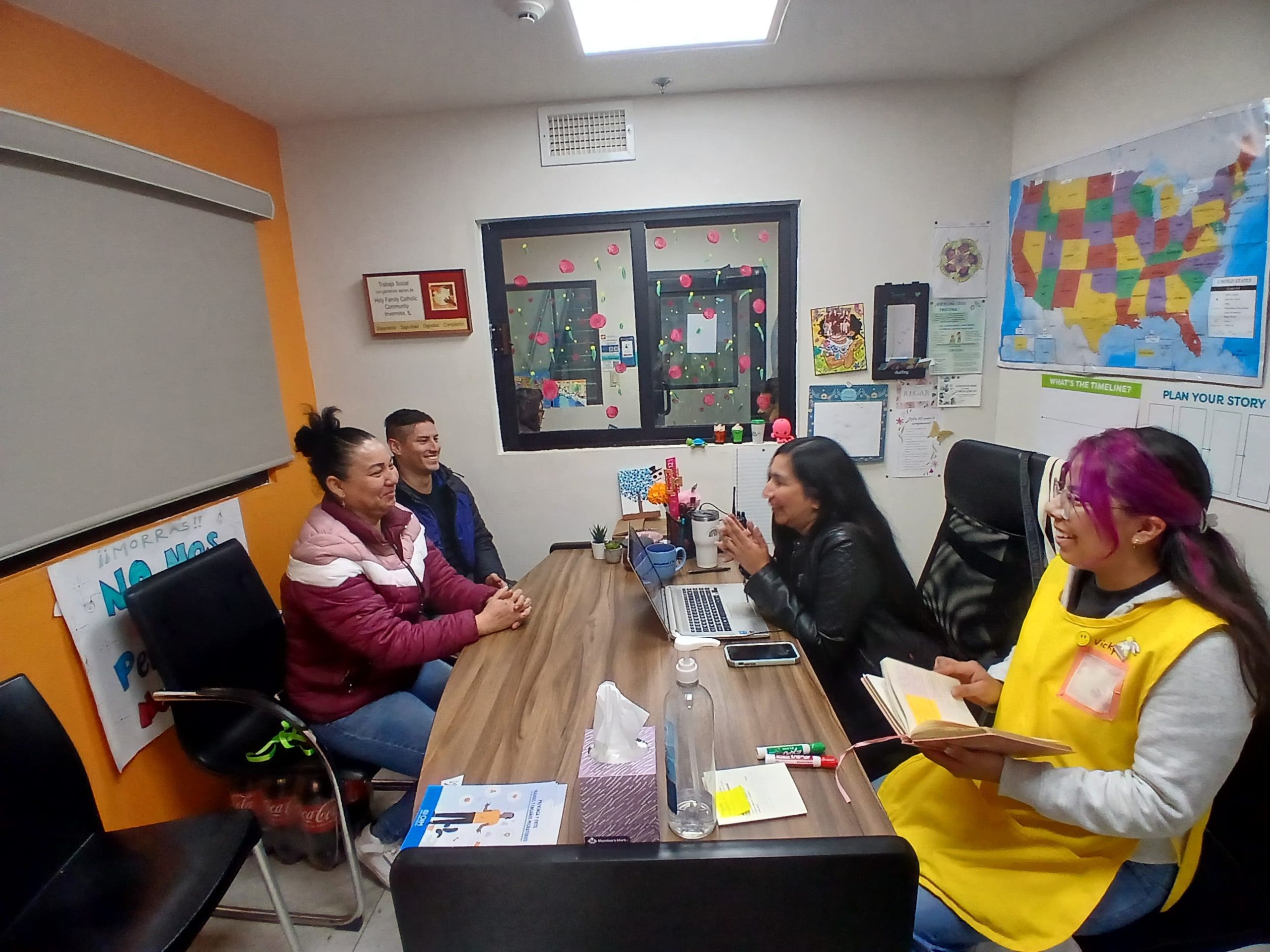
As KBI journeys with people in the process of grief and mourning, the psychosocial team also holds space for people on the move to also experience joy and creativity, and supports them in the practical matters of rebuilding life. The team connects people with essential aspects of life like school, shelters, and medical care. People on the move are encouraged to participate in the Livelihood Project, which hone marketable skills while building community. Together, this tapestry of holistic accompaniment helps people on the move build resilience and experience renewal.
Of course, the KBI team must also care for its psychosocial well-being in order to accompany migrants well. Alma Reynoso serves the team as the Organizational Development Leader, a role that was created as part of KBI’s strategic priority to promote equity and wellness for staff. That means that along with many other functions, Alma uses her gifts as a trained psychologist to also hold space for staff to process their own trauma.
“The first day I got back from maternity leave, about five people separately told me how important it was to have Alma around,” Joanna laughs.
Communally, KBI and people on the move also support one another through expressions of faith. Daily prayer before meals, opportunities to pray in smaller groups, and liturgically participating in days like All Souls Day allow everyone to mourn together.
“There is real trauma and grief here. Even when we don’t feel hope, we can come together in unity and embrace the discipline of hope as a community of care,” Joanna says.
Memory, Mourning, and Migration with Dignity
Memory is a profound part of our faith, connecting us to those we love and to those we have lost. As we enter this month of memory and prayer, let us accompany one another and reflect on the legacy we wish to leave behind.
In honoring memory, we can join together in mourning and healing while envisioning a world where policies honor human dignity rather than inflict pain. Together, we can uplift memory and work toward a future of Migration with Dignity, grounded in hope and in a shared commitment to a world where grief and pain are no more.
Leave a Reply